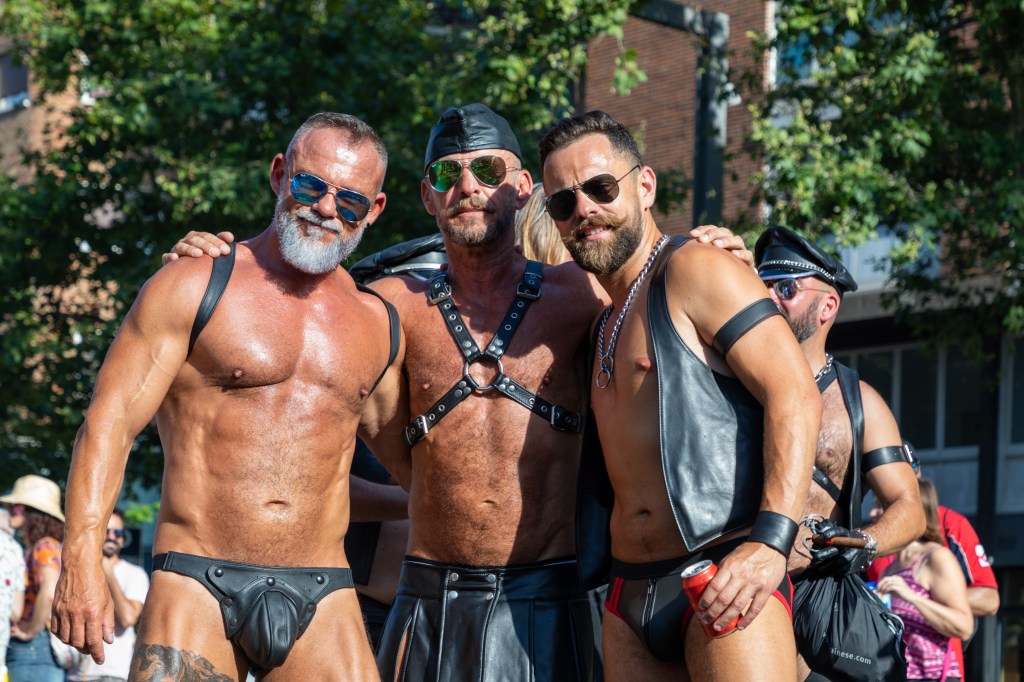
I had never done it before, but this time I did. I deleted all leather profiles on Facebook of people with showcase lives, plastic smiles, impeccable skin, fit bodies, and fake postures, and of those with such active social lives that they never miss an event.
I didn’t know them in person, yet their posts flooded my feed as if they were celebrities. The final straw was a post from one of them that read:
“If you see me at an event, you can greet me without a problem, even if I’m busy. And if I don’t recognize you, don’t take it personally because events are very stimulating, and that happens to me often.”
More than an invitation, it sounded like a public relations message from someone who fancies themselves a public figure. This superficiality hampers real community bonds. Leather title holders must project authenticity rather than live for appearances.
Instead of community, many title holders’ public projection becomes a spectacle and a personal trademark. Isn’t genuineness supposed to be a core value in the scene?
The leather subculture emerged as a form of resistance, and today it’s diluted by superficiality and runway titles. What was once counterculture is now reduced to a display. That’s the betrayal that offends.
Many leather profiles on social media don’t aim for genuine community; they operate as a business. Followers become a captive market, which makes me feel that true connection is fading in favor of profit and show.
Posturing isn’t limited to photos or titles either. Brands have also become part of the performance. Having Langlitz leather, which has become an international standard, or a Vanson, an emblem of New England, is a gesture that demonstrates prestige and purchasing power. Leather ceased to be an intimate language and became a classist hierarchy.
The historical context that gave rise to the leather subculture in the 1940s changed as society evolved. What began as a language of resistance in times of repression now feels like a betrayal of its original purpose, evoking a sense of loss and concern.
Historic bars and fraternities are no exception. Many social clubs regulate who can join and who is “a genuine leather man.” Judging by what happens at bar nights, they are relics with more inactive than active members, who survive by collecting dues.
Other organizations have become event machines. They spend months silent, then reemerge with a contest, an anniversary, or a themed weekend. More than living fraternities, they resemble production agencies with bylaws, but without the vitality that once justified their existence.
In my case, I explored the leather scene in 2021, just after the pandemic. I posted my photos on social media and received overwhelming positive reactions, but I never used them to become a star.
However, I immediately noticed the hierarchies and cliques. Some members on the BLUF app even incorporate the Langlitz brand name into their usernames, as if that defined their identity, and one told me not to bother him if I don’t have Dehners, which I had sold months before to stay with my Chippewa engineers for a better fit at the shaft. He found me attractive only if I wore his desired brand. How dysfunctional and objectifying could that be?
I concluded that leather still represents me as a fetish and a symbol of non-toxic masculinity, but not the entire scene. I can attend events and enjoy them, but I’ll never idolize individuals, no matter how long they have been in the scene. Leather will remain mine as long as I experience it as a fetish to spice up my sexuality and enjoy others with a similar mindset out of the spectacle.
 THE HUMANITY BENEATH THE LEATHER:
Leave a comment